
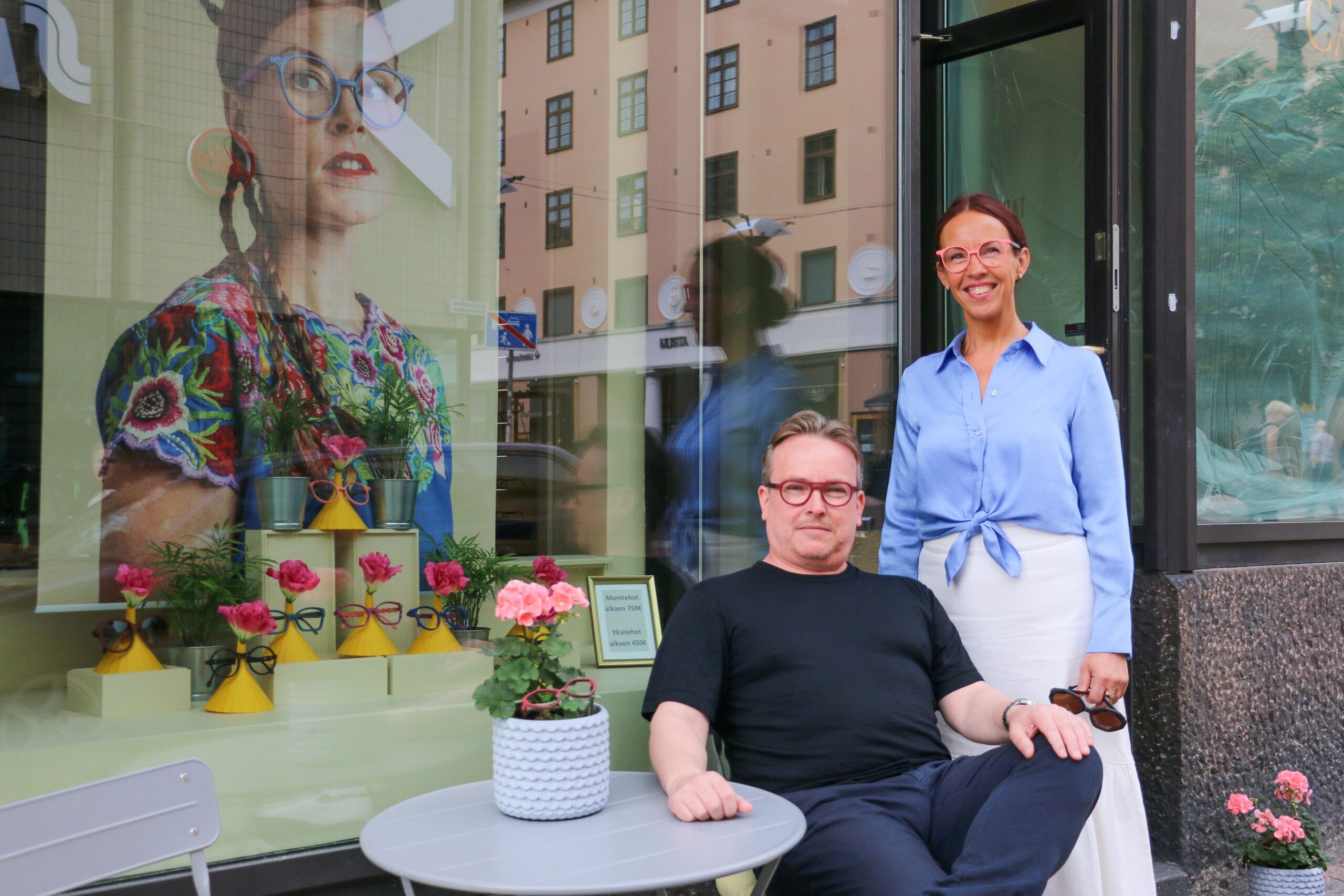
Turku-based entrepreneurs want to avoid common pitfalls in custom 3D manufacturing with agile, cost-effective measurement technology. Turku’s universities are boosting their development work.
Experienced optician Tuulia Alanen-Brandt repeatedly faced the same problem in her work: the shelves simply didn’t have glasses to fit every customer.
– If someone has, for instance, particularly small or large facial features, or a small nose paired with a wide face, finding well-fitting, attractive glasses that match their personal taste is extremely difficult, she says.
Meanwhile, engineer Teemu Lohimies was exploring business opportunities in digital manufacturing.
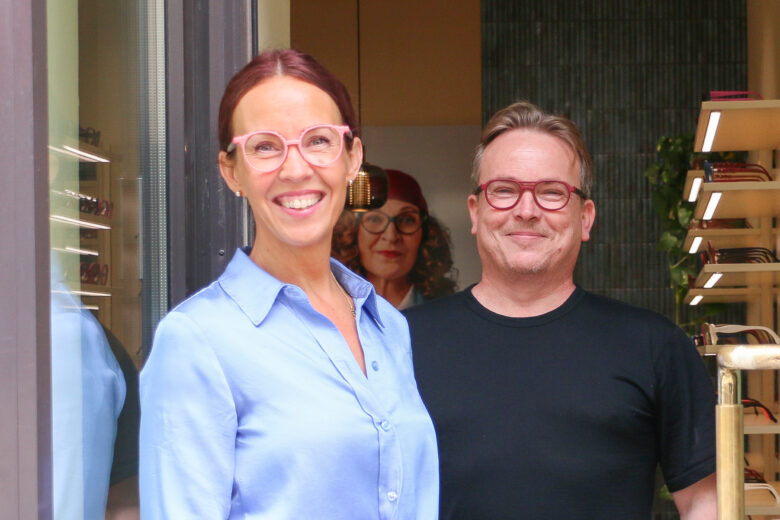
When the Turku-based duo met, they came up with the idea of custom eyewear made with 3D printing technology. Several phases later, Tarume eyewear now has 80 retailers in Finland.
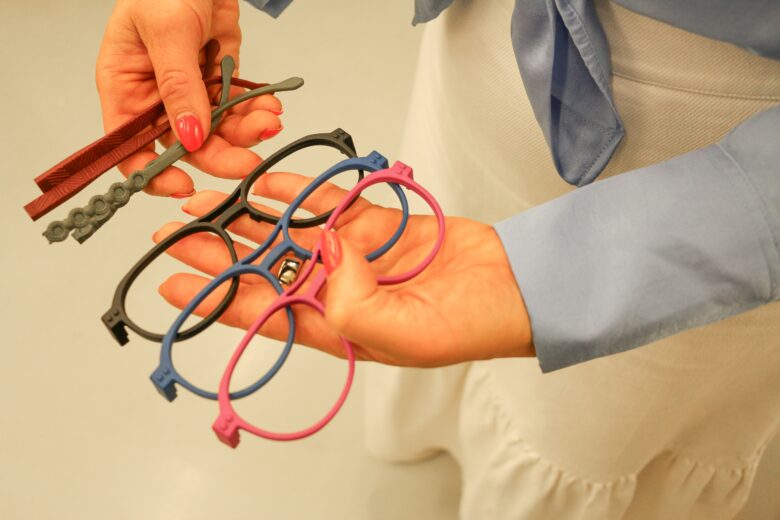
– We can create custom-fitted glasses and produce designs and details that simply aren’t possible with traditional acetate or metal manufacturing, Alanen-Brandt says, listing the benefits of the technology.
R&D support from Turku University of Applied Sciences
Meanwhile, Dimea, the company behind Tarume, is pushing forward with intense research and development work. While measurements for Tarume’s custom-fit glasses are currently taken by hand, Dimea is looking into digitizing and automating the measurement and modeling process.
Alanen-Brandt points out that globally, custom 3D manufacturing often runs into a hurdle: optical stores are required to invest in expensive measuring equipment. The Tarume team aims to make it easy for retailers by utilizing customer photos and agile technology.
One technical approach is currently being piloted in a project with Turku University of Applied Sciences. The method uses photos of the customer to create a digital 3D face model and enable virtual fitting.
The project is supported by a Research, Development, and Innovation (RDI) voucher coordinated by Business Turku and financed by the City of Turku.
Teemu Lohimies notes that the founders had spent a long time searching for a tech partner. He is pleased with how smoothly the RDI voucher details were agreed upon with Business Turku.
– It was a really fast process. We remain very interested in the talent available in this region. Our product development is not limited to this project, he adds.
Sustainable Production Technology
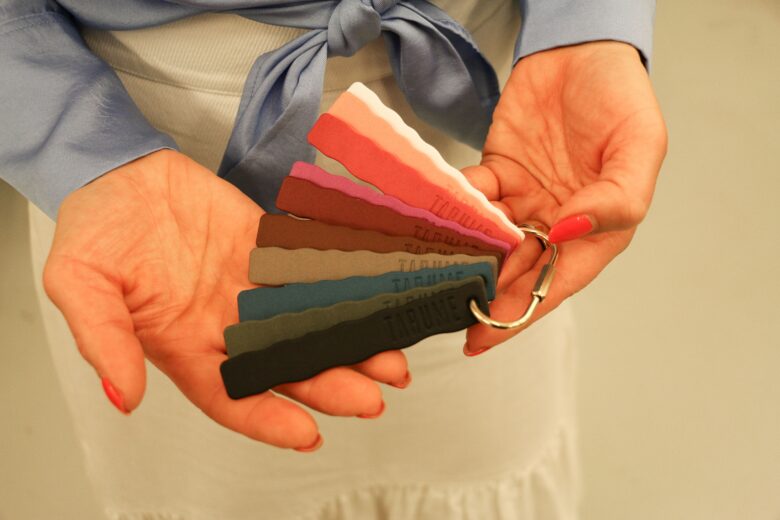
In addition to agility, Tarume aims to make its products as eco-friendly as possible. Dimea is also participating in the Business Finland-funded CirBReS project (Circular Bio-based Residues to Sustainable Bioproducts), which focuses on developing new, sustainable materials.
The project involves partners such as the University of Turku and Åbo Akademi University. Alanen-Brandt notes that through this project, Tarume could find even more sustainable materials for its eyewear production.
The co-founders point out that 3D production is naturally sustainable due to its additive nature: printing components instead of cutting them generates next to no material waste. Custom-made glasses also offer the added benefit of having a buyer lined up before production.
– And this manufacturing technique allows you to produce a hundred completely different frames in one process. That’s what distinguishes 3D printing from traditional production, which relies on making thousands of identical frames, Teemu Lohimies says.
Aiming for International Markets
Tarume aims to become an international brand. Last year, Dimea’s sales grew by about 45 percent compared to the year before. A major step was getting the Tarume Art frame collection into Synsam optical stores in the autumn of 2024.
This year, growth has been somewhat more moderate, as the focus has been heavily on product development and preparations for internationalization.
With Business Finland’s Market Explorer funding, the company has been researching opportunities in Germany. Growth goals exist, but Alanen-Brandt is not revealing them just yet. Much depends on ongoing negotiations with German retailers.
– And in the optics industry, negotiations tend to take a long time, she says.
Internationally, Tarume’s biggest rivals are fellow 3D-manufacturing brands. Frame designer Alanen-Brandt believes that Tarume stands out from the competition through individuality, design, sustainable materials, and sustainable production.
The first Tarume product is eyewear. The co-founders believe that in the future, 3D printing technology can be adapted to personalized fashion production more broadly.
– We’d like customisation to be the new mass production. That way, there wouldn’t be as much excess waste in the world, Alanen-Brandt says.
Text and pictures: Heidi Pelander
This article was produced as part of the EU co-funded InnoTurku project, which helps companies grow, internationalise, and engage in research, development and innovation (RDI) collaboration.


Need help with your RDI development?
Do you have a current development idea or project in mind for your business? We support companies in the Turku region in advancing their research, development and innovation (RDI) activities. Get in touch!