Finland’s role in NATO’s innovation and testing activities continues to strengthen. At present, dozens of Finnish and international defence technology companies have gathered in Finland as part of the NATO Innovation Range (NIR) event series. Next-generation sensor technology and data transmission tested in a maritime environment in Turku.
The testing event series takes place from 1–10 June in Turku, Riihimäki, Joensuu and Oulu. The testing covers four technology domains: command and control systems, AI and data solutions, communication technologies, and sensors. In addition, a counter-drone testing event, LCI-X Crucible 2-26, is being organized alongside it.
The aim is to ensure that solutions and forces operate seamlessly together.
– Collaboration among participants is progressing well, and companies have already provided very positive feedback during the first days. Defence technology development works best when developers are as close as possible to the end user, says Ville Hietikko, Programme Director at the Digital Defence Ecosystem.
The Ministry of Defence serves as the national authority responsible for the testing events. The event series is organized under its mandate by the Digital Defence Ecosystem and DEFINE innovation ecosystems in cooperation with the Borderland Europe initiative, as well as Business Joensuu, BusinessOulu and Business Turku.
– This is yet another significant step towards establishing long-term NATO-related innovation and testing activities in Finland, states Hietikko.
– For Finnish companies, this is an opportunity to demonstrate their capabilities in realistic conditions and to network with NATO actors and international partners.

“We are ready for the actual testing operations”
Finland offers exceptionally diverse testing environments, from the maritime conditions of Turku to NATO’s eastern border operating environments in Joensuu. Testing is also conducted in scenarios related to autonomous systems and long-range communications in Oulu, as well as in situations focusing on the integration of command and control systems in Riihimäki.
The overall coordination of the program, hosted by Finland and led by NATO’s Allied Command Transformation (ACT), is handled by Timo Salonen from Finland’s Permanent Delegation to NATO.
– The preparation phase of NATO’s LCI-X Crucible 2-26 operational experiment has been successfully completed. We familiarized participating companies, carried out self-testing activities, and built the network connections and services required to support OPEX testing. We are ready for the actual testing operations on Monday and Tuesday, when we will demonstrate NATO’s C-UAS and C2 capabilities, he says.
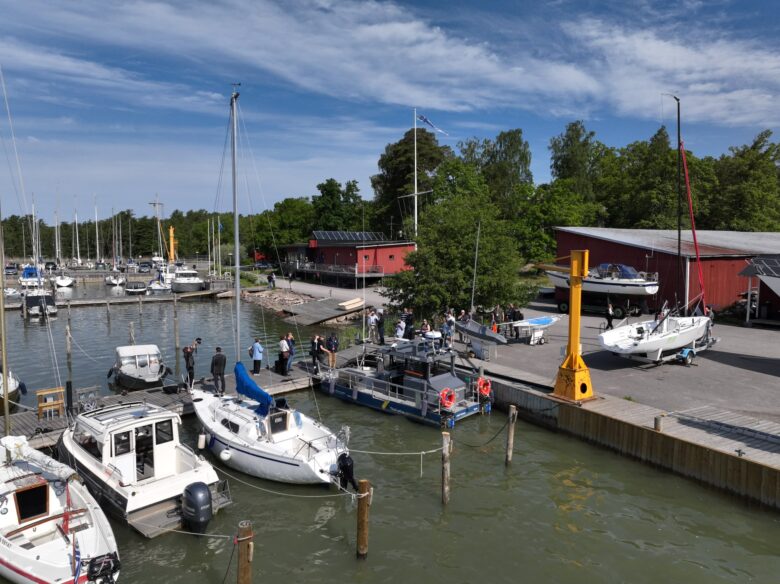
New-generation sensor technology and data transmission tested in a maritime environment in Turku
Business Turku joined the Borderland Europe collaboration in March 2026, which aims to build an innovation and testing corridor for border security and dual-use technologies in Finland, stretching from the eastern border to the Archipelago Sea. As part of this collaboration, the maritime testing environment for the NATO Innovation Range exercise was organized in Turku.
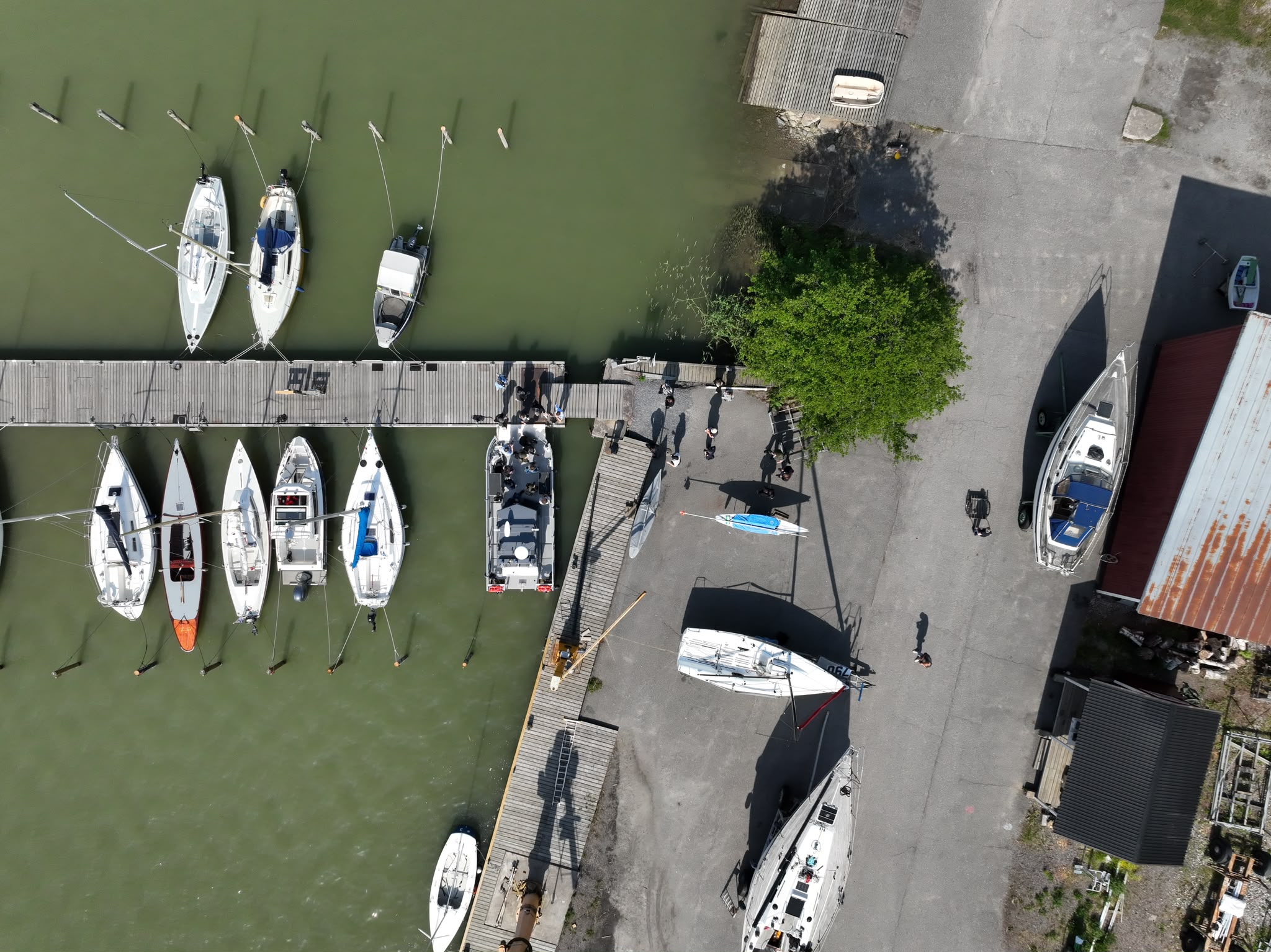
In Turku, testing focused on a maritime operating environment in the Ruissalo area. The exercise explored how to transmit a reliable situational picture to a command center using technologies that eliminate the need to deploy personnel on site or maintain continuous and easily detectable radio connections, such as mobile or satellite networks.
During the test, a sensor network was installed in the harbor to monitor the environment and detect, for example, whether people were moving in the area. The sensors transmitted the collected data to an unmanned vessel, from which a router relayed the situational picture to a command system in Riihimäki.
In addition, a long-range radio system installed on the vessel was tested. This system enables beyond-line-of-sight data transmission even in a disrupted radio frequency environment.
– This new-generation technology improves both security and operational reliability in exceptional situations. Situational awareness can be built without requiring personnel to be physically present in the field or on a vessel,” says Sami Metsänperä, Defence Ecosystem Lead at SADE Innovations.
The testing involved Finnish companies SADE Innovations Oy (integration of the sensor network into the situational awareness system), Sensoan Oy (sensors), KNL Networks Oy (radio connectivity), and Millog (situational awareness system), as well as Turku University of Applied Sciences with the remotely operated vessel eM/S Salama.
However, on this occasion, eM/S Salama was exceptionally operated from onboard the vessel.
NATO cooperation creates new opportunities for companies in the Turku region
The NATO Innovation Range event in Turku provided an opportunity to showcase the expertise and solutions of partner companies from the Turku region and across Finland in practical testing.
– At the NATO Innovation Range testing event, we were able to concretely demonstrate the kinds of solutions and expertise we, as Turku University of Applied Sciences, can offer our partners. Companies gained valuable insights into the performance of their products in real-world conditions and within a broader operational context. This strengthens their ability to offer competitive solutions in international defence and security markets, describes Mikko Pänkäälä, Principal Lecturer at Turku University of Applied Sciences.
– Southwest Finland has a complete value chain for maritime security. As the region becomes more strongly integrated into NATO cooperation through events like these, it creates opportunities for local companies to develop and offer services across the entire Alliance, says Tero Niemi, Director of Operational Environment Development at Business Turku.
Further information
Ville Hietikko, Project Director, Digital Defence Ecosystem
tel. +358 40 526 2899 / ville.hietikko@digitaldefence.fi
Petra Kaurisluoma, Head of Marketing Communications, Digital Defence Ecosystem
petra.kaurisluoma@digitaldefence.fi
Visit Digital Defence Ecosystem website