
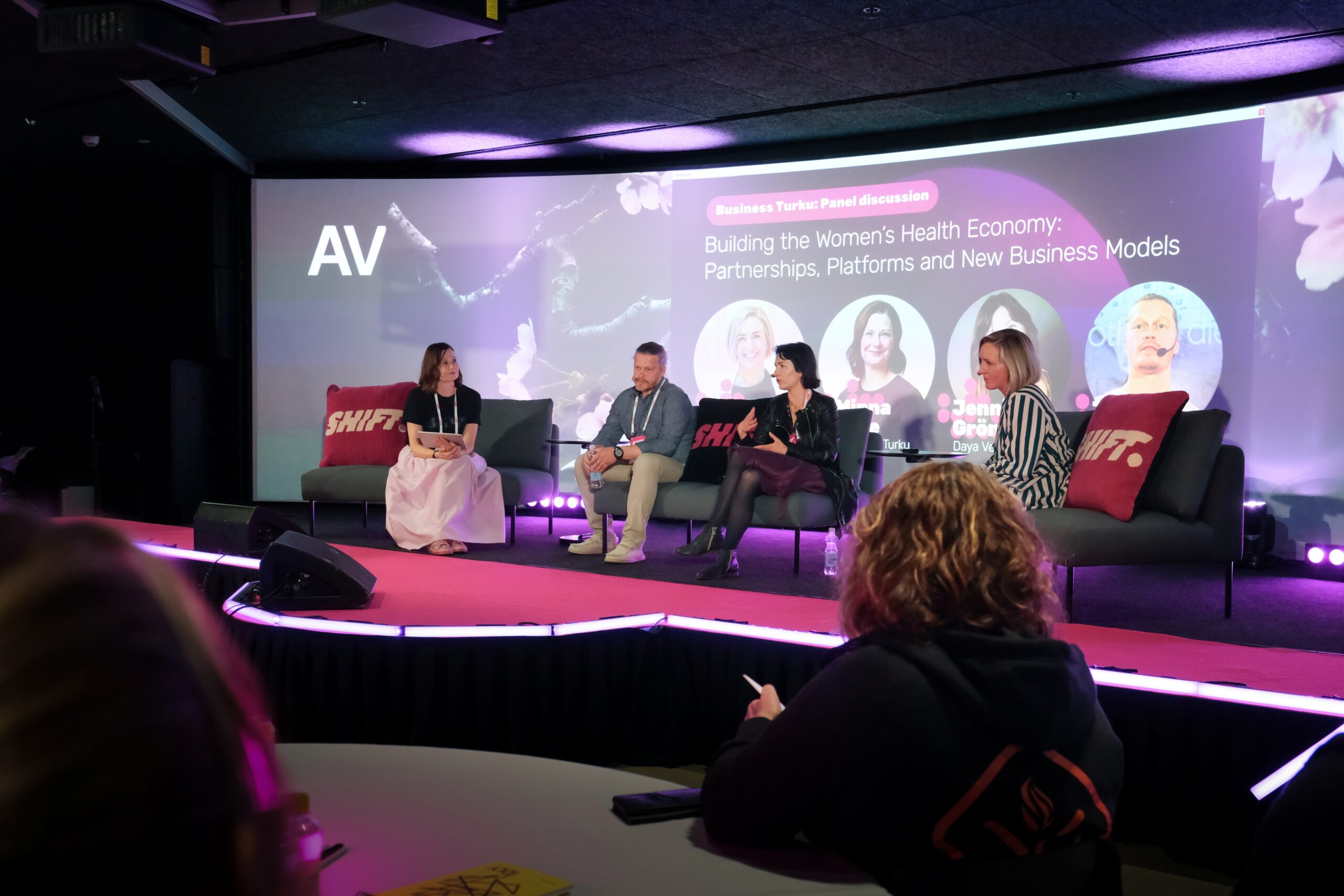
Women’s health is not a niche market but a major business opportunity that could significantly boost Finland’s GDP. Startups in this sector are receiving world-class support to scale their businesses through the Eir Accelerator program, coordinated by Business Turku as part of the Women’s Health Hub Finland network.
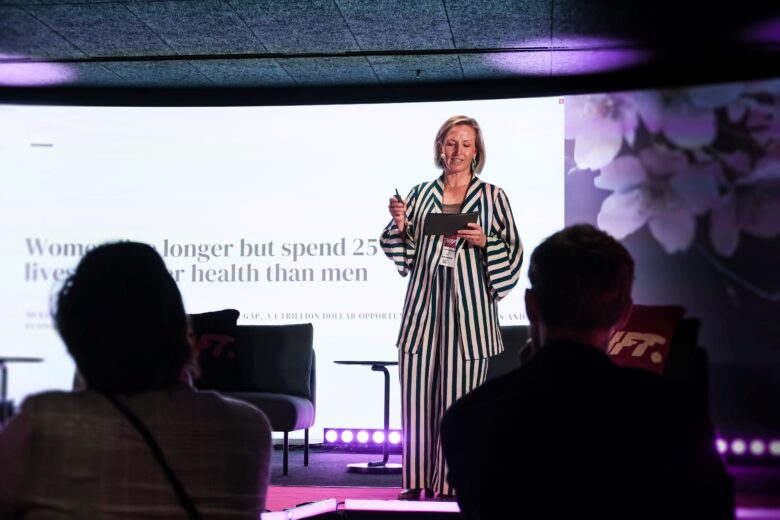
Investment in women’s health remains astonishingly low, despite women making up half of the world’s population, notes Aura Pyykönen, a specialist in obstetrics and gynecology, founder of the Isla Terveys digital clinic, and a women’s health advocate.
Globally, private healthcare funding totaled just under three trillion dollars between 2020 and 2025. Of this amount, a mere six percent went toward women’s health, and only one percent was allocated to companies focusing specifically on women’s health.
– We underinvest in women’s health because evidence is limited and evidence remains limited because we under invest in women’s health.
Meanwhile, women’s health challenges are much broader than generally understood. Pyykönen notes that hormonal shifts throughout a woman’s life significantly affect women’s cardiovascular health, brain health, and immune system.
– Eighty percent of immune disease patients are women. Migraine is three times more likely among women. This is what we should talk about when we talk about women’s health.
From Innovations to Scalable Business
According to Pyykönen, Finns excel at creating healthcare innovations. As a prime example in women’s health, she points to the hormonal intrauterine devices (IUDs) developed at the Bayer plant in Turku.
– Hormonal IUD is a magnificent story of how research met the clinical need and how it was then scaled into a global success story.
Pyykönen’s conservative estimate suggests that women’s health could add two to six billion euros to Finland’s GDP. To ensure that these economic benefits stay in Finland, new innovations must also be scaled here.
Pyykönen emphasizes that in their early stages, innovations must have access to public funding and piloting opportunities within the public sector. Scaling, however, requires private investment. Startups and small research groups also need streamlined access to health data.
– We often claim that we own the best health data in the world, but it’s not worth much if there is no access to it.
Tuomas Nyman agrees, bringing his perspective as the CEO of Neuvo Inc. Global, a company specializing in ethical AI technology. He believes Finns have a strong chance at global success, provided that domestic investors can be convinced of the innovations early enough.
– Otherwise, we lose the control of the innovation, the data, and the IP, he says.
Boosting Growth with a Specialized Accelerator
Business Turku’s innovation network, Women’s Health Hub Finland, brings together pioneers in women’s health. It houses the Eir Accelerator, Finland’s first accelerator program dedicated to early-stage startups focused on women’s health.
– The startups get help from the best experts on everything from business growth to clinical innovation and of course access to investors, pilots and cooperation with our partners, says Anastasiya Markvarde, a women’s health expert and Head of Eir Accelerator.
She notes that there is a significant need for an accelerator program focused on women’s health. Commercializing innovations and scaling business in this sector require specialized, industry-specific knowledge, particularly regarding regulatory compliance and clinical evidence.
– There is censorship in the social media of different terms and wording related to women’s physiology and women’s health. That is also why I think that it’s important to have this type of programs.

Much to Gain in Women’s Health
For a startup aiming to go global, understanding the target market’s culture and regulatory environment is essential, says Tuomas Nyman, CEO of Neuvo Inc. Global. Finland’s strong global reputation is an asset when closing deals.
– Anything health-related that comes from Finland is always treated with utmost respect when you go abroad. People trust us and the innovations that we do.
According to Anastasiya Markvarde, an increasing number of investors in both Europe and the US are turning their attention to women’s health. While the sector is challenging for startups, the business opportunities are immense for those that succeed.
– For example, in Canada, they estimated that if women’s health needs are covered, the impact for the economy would be more than from implementing AI in healthcare.
Aura Pyykönen is pleased to see that the Finnish government is also waking up to the importance of women’s health. The Ministry of Social Affairs and Health is currently drafting a comprehensive national strategy for women’s health, because the sector remains under-researched and gaps persist in women’s healthcare.
Pyykönen points out that for decades, healthcare systems have been developed with a focus on survival. She believes it is finally time to prioritize quality of life as well, ensuring that women remain healthy, well, and active participants in society.
– And please, let’s not refer to women’s health as a niche anymore.
Text: Heidi Pelander
Photos: Simo Ahtee