The article is part of a series exploring companies’ investments in research, development, and innovation.
Thanks to the expertise of the Turku-based company OliOil, which develops oil spill response equipment, oil spills can be efficiently detected and contained from vessels operating at sea. The required technology and vessels are developed and manufactured both globally and by professionals from Southwest Finland.
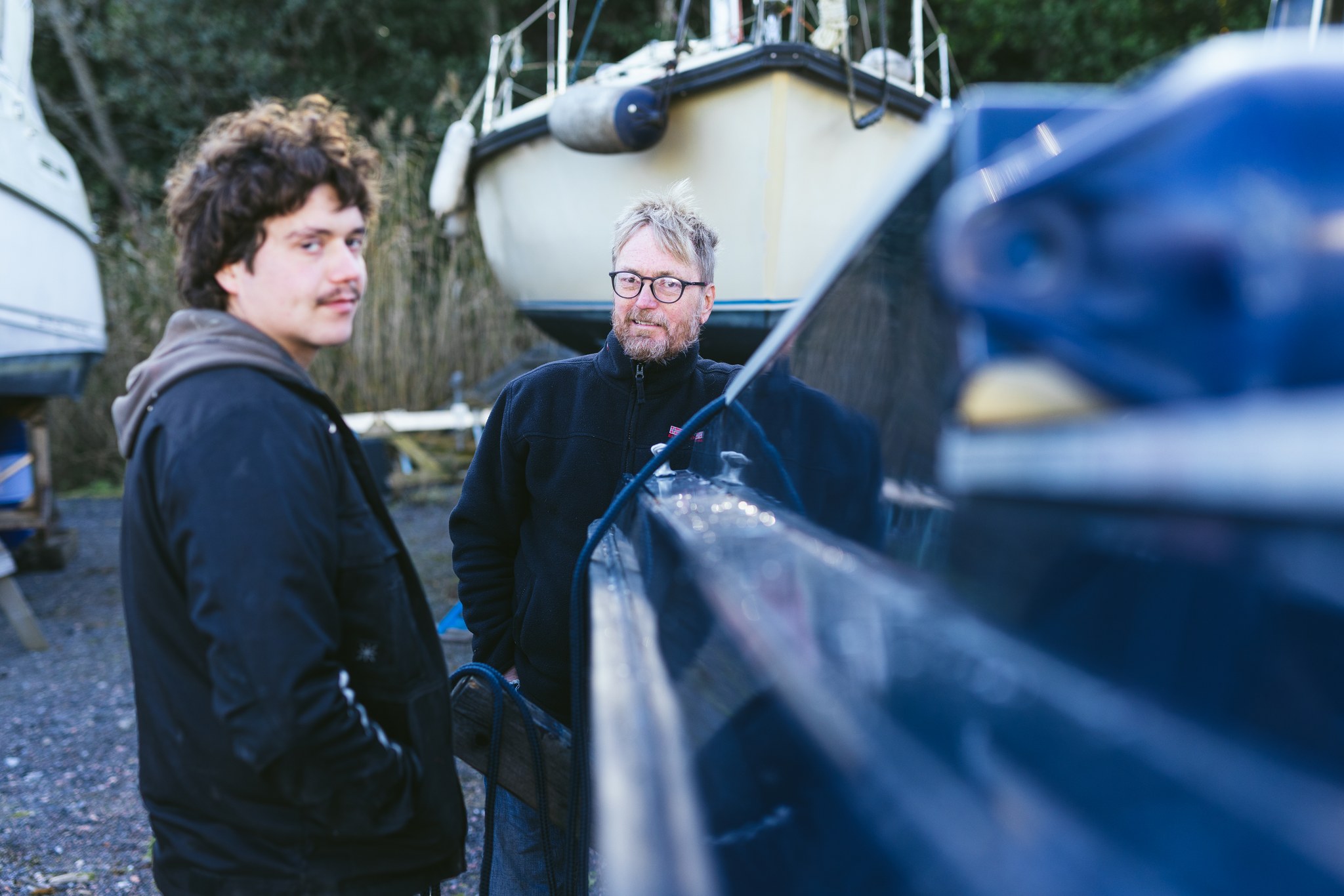
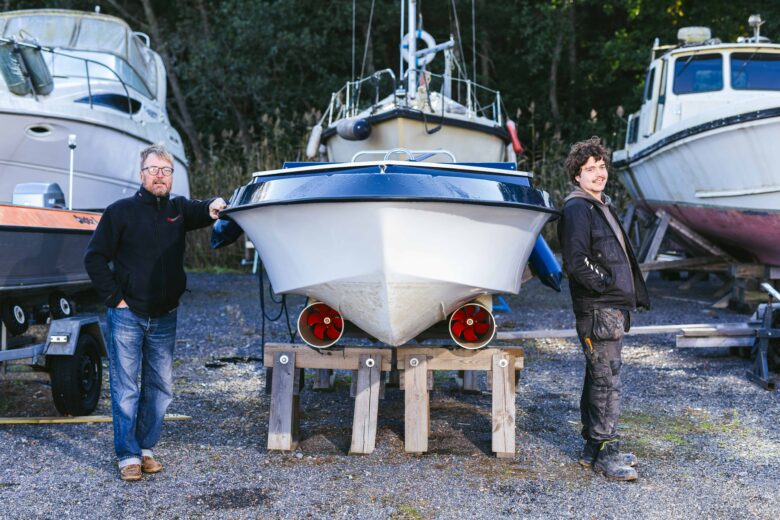
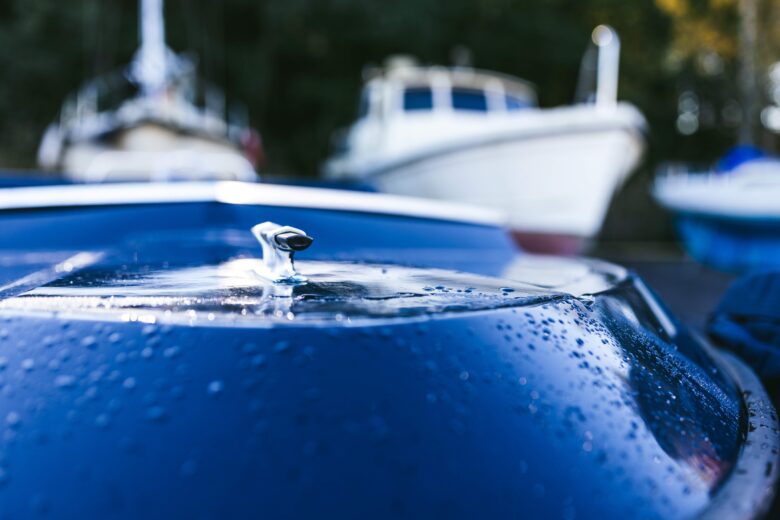
On a windy and sunny autumn day at a boatyard in Hirvensalo, Kristian Laiho, Chairman of the Board of OliOil Oy, examines the prototype of the company’s vessel together with its builders, Esa Martin and Iiro Maunula. The streamlined vessel, with a sleek dark-blue surface, has been lifted onto dry land for the winter after being tested in Turku’s waters at the end of summer.
– The prototype is part of OliOil’s project, which applies robotics and artificial intelligence to develop an automated system for detecting and collecting oil spills. Local boatbuilding expertise will continue to play a key role as the project progresses, says Laiho.
From Startup to Global Player
Founded as a startup in 2023, OliOil originated from a project launched in 2021 by Lappeenranta–Lahti University of Technology and St. Petersburg University, focusing on the protection of the Baltic Sea. The project gathered and produced data showing the urgent need for rapid oil spill response.
According to Laiho, oil spills occur somewhere in the world’s oceans every fifteen minutes. Most ships are over 30 years old, and their hulls are prone to bending under harsh sea conditions, which often leads to leaks.
Typically, oil spills are detected from port control centers. Even when a spill occurs near a harbor, help often cannot arrive fast enough.
– In oil spill response, the most critical factor is rapid detection and immediate containment. An oil slick moves at seven kilometers per hour and disperses into the sea within a month. If the spill isn’t contained immediately, it’s practically impossible to minimize its environmental impact, Laiho explains.
Does your company need support with research collaboration, product development, or commercialization? Business Turku’s experts will help you get on the right track.
Robotics and AI at Sea
In OliOil’s system, a cargo or tanker ship carries a container unit that includes a robotic vessel and all necessary oil containment equipment, such as inflatable oil booms. The container and its contents are fully autonomous, and remote control can be operated from any port or land-based station. Drones provide close-up imagery of the spills.
When an oil spill occurs, the robotic vessel is deployed, and containment can begin immediately. The system remains at the site to contain the spill until cleanup equipment arrives to recover the oil.
– Under EU regulations, oil spills must be addressed, and the legislation is about to become significantly stricter. Additionally, with satellite surveillance, tankers can no longer quietly escape the scene after causing a spill, Laiho notes.

Local and Global Expertise
OliOil currently employs six people across Turku, Espoo, Paris, and New Delhi. The company has opened an office in Paris and is planning another in Dubai. Its clients include shipping companies, ports, and protected environmental sites.
– Our goal is to produce around 1,000 container units by 2030 for tankers operating from the United Arab Emirates all the way to Northern Europe, Laiho says.
OliOil was recently ranked the world’s sixth most significant pioneer and startup in the oil and gas industry by the analytics company StartUs Insights.
This development also brings opportunities for local boatbuilders. A product development unit will be established in Turku, led by Esa Martin and Iiro Maunula.
– The boatbuilding industry is highly cyclical and was hit hard by the COVID-19 pandemic. Finland has long been a leader in boatbuilding, and Southwest Finland has a wealth of expertise, Laiho says.
Martin and Maunula are eager to move the project forward and praise the local marine industry network, which will be utilized in product development and manufacturing.
– For example, hydraulic expertise can be found in Oriketo. Many different parties are involved in this overall project, they note.
Collaboration is also underway with local universities. According to Laiho, Åbo Akademi’s Department of Naval Architecture has played a key role in the EU-funded Zero Emission Marine ecosystem project, and the university is also a frontrunner in remote-control technology expertise.
OliOil’s business is supported by a diverse expert network across six countries. Software engineers work in New Delhi and the United States, the head of the French unit is based in Paris, and the company’s Development Manager works from Espoo.
– With this network, a small Finnish company can launch its product locally in key regions and expand its operations globally, Laiho says.
Laiho describes himself as a coordinator, managing the roles and collaboration of various partners in the joint project. The next phase, Zero Maritime Ecosystem, will involve more than a dozen people.
– The blue economy — or sustainable maritime economy — is both global and local at the same time, he adds.
Support from Business Turku
OliOil has received support from Business Turku for its research, development, and innovation activities. Laiho, who has been part of the Southwest Finnish business community since the early 2000s, is well acquainted with the organization’s culture.
– Business Turku offers unparalleled opportunities for local, national, and international networking and for promoting business ideas. Their support is genuinely accessible — there’s no question you can’t get an answer or advice for, Laiho praises.