
First bottom-up, register-anchored analysis of women’s health in Finland covers 50 conditions across six life stages and shows how Finland can build on national programs that already work.
Health conditions affecting women cost the Finnish economy an estimated €15.9 billion every year, according to a new cost-of-illness study published by Eir Accelerator and Suncoast Ventures.
Equivalent to approximately €5,580 per woman annually, the analysis is the first bottom-up, register-anchored estimate of its kind for Finland. It covers 50 conditions across six life stages and combines healthcare expenditure with the economic costs of absenteeism, presenteeism and employer-borne productivity losses.
The findings prove yet again that women’s health is not only a healthcare issue but a major economic issue. Of the total annual burden, €8.1 billion flows through the healthcare system, while a further €7.8 billion is absorbed by the wider economy.
Importantly, women aged 25- 44 account for 56% of all productivity losses identified in the study. These are critical years for earnings, career development, caregiving and pension accumulation which reinforces the need for action in women’s health.
The largest costs remain poorly visible
Endometriosis is the largest individual cost in the model, at €1.83 billion annually. Yet it is not visible as a dedicated condition in Kela’s publicly reported sickness-absence statistics, making its full impact difficult to measure through the registers responsible for recording and compensating absence.
Depression follows at €1.34 billion, with type 2 diabetes at €1.14 billion. Together, the ten highest-cost conditions account for nearly two-thirds of the total economic burden identified by the study.
The largest disease cluster is menstrual and pelvic health, generating an estimated €4.9 billion in annual costs.
The authors state that the diagnostic attribution correction (DAC), a peer-reviewed technique for disaggregating overlapping costs, was applied. The DAC was invented for overlapping conditions, so it’s uniquely suited for this type of studies.
Finland already has a blueprint
The study also highlights what Finland does well. Nationwide cancer registration, organised screening and continuous evaluation have created a system that can identify risk, detect disease earlier and improve pathways using long-term evidence. In cervical cancer, screening detects more than 600 precursors and early-stage cancers annually, while incidence and mortality have fallen to one-fifth of their 1960s levels.
This is one of the reasons why women’s cancers carry a comparatively lower cost in the model: Finland has invested in measuring them, preventing them where possible and treating them earlier. It demonstrates what coordinated national infrastructure can achieve. Finland could now apply the same principles like systematic measurement, prevention, early diagnosis, clear pathways and continuous evaluation to other high-burden women’s health conditions like endometriosis.
In addition, cancer estimate in the model is conservative, it is costed on new diagnoses only and excludes the full population living with and beyond cancer, survivorship, presenteeism and premature mortality.
The purpose of the study
The study was authored by Mark Gannott, CFO and health economist at the US-based Suncoast Ventures and an Adjunct Fellow at Western Sydney University’s NICM Health Research Institute. His work spans venture investment, health economics and national cost-of-illness research, with particular expertise in endometriosis, chronic pelvic pain and other underfunded conditions. Gannott now also serves as Head of Portfolio Insights at Eir Accelerator.
– After working on women’s health economics across the United States, Australia and other international markets, Finland stands out as a clear example of what becomes possible when national health infrastructure is designed to work together, said Gannott.
– Through my work with Eir Accelerator, I got familiar with the Finnish ecosystem and have been impressed. The combination of national registers, longitudinal cohorts and biobanks creates an unusually powerful foundation for understanding women’s health at a population level and for generating evidence that can support better research, policy and investment. At Eir Accelerator we are working to help make this happen. The study builds the economic picture from the ground up, condition by condition, with every source graded and every assumption open to scrutiny.
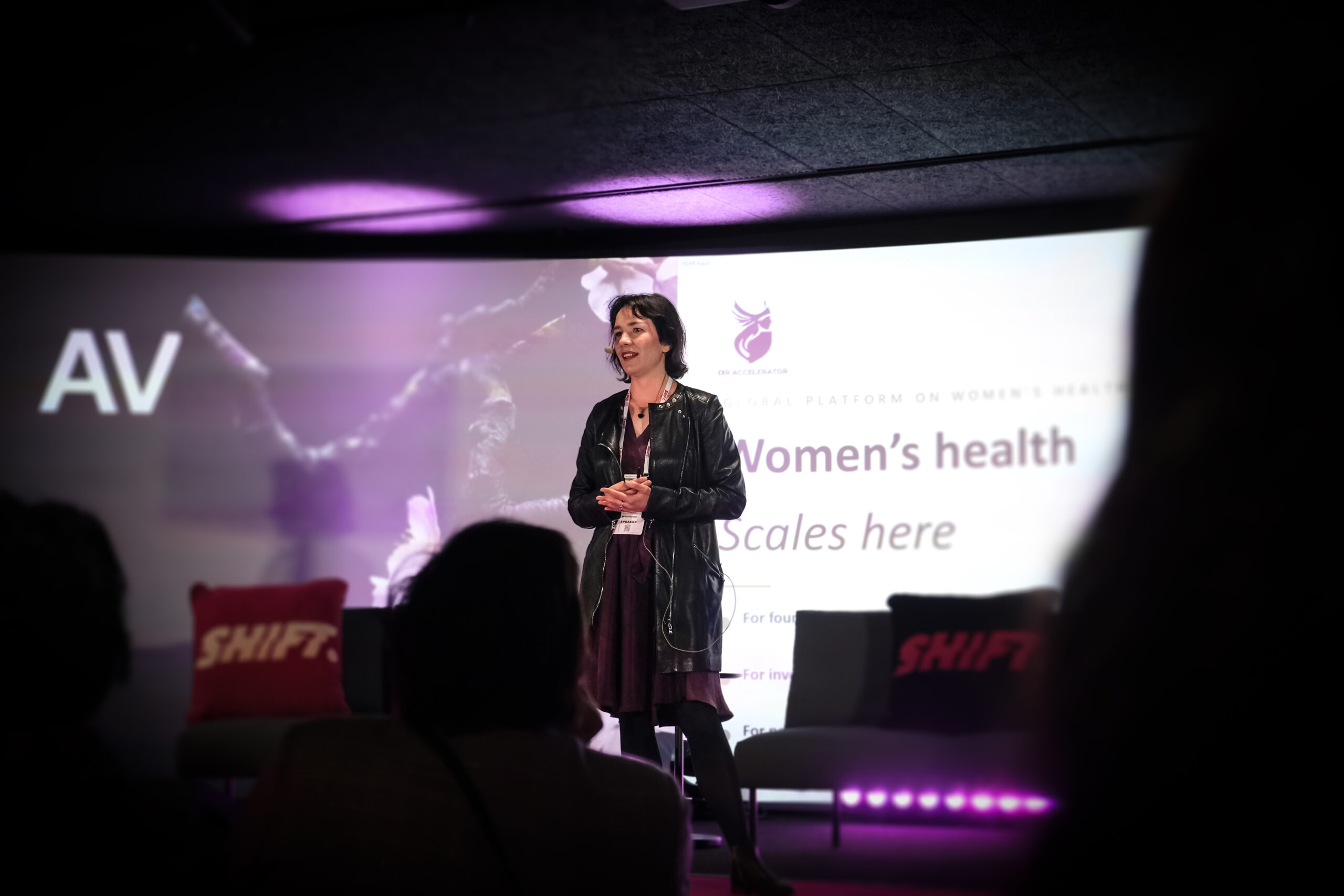
Anastasiya Markvarde, Head of Eir Accelerator and editor of the study, explains the rationale behind conducting this work.
– It was extremely important for us to show how critical women’s health is for the Finnish economy and why it should become a national priority. Finland is already paying this bill, but until now, no one had brought its fragmented costs into one national picture. Making the burden visible gives us a basis to act: to measure what is missing, intervene earlier and apply Finland’s strongest health-system capabilities to conditions that have remained overlooked,” said Markvarde.
– At Eir Accelerator we focus specifically on supporting women’s health innovations that can help to improve women’s lives, and consequently, reduce the burden.
From evidence to action
The study findings point to three priorities:
- Make menstrual and pelvic conditions visible. At €4.9 billion annually, they form the largest condition cluster in the model, led by endometriosis at €1.83 billion. Finland needs national reporting and coordinated pathways that reflect the scale of this burden.
- Address the Head & Mind burden. Mental and neurological conditions together represent the study’s largest body-region burden, at approximately €6.0 billion. Depression alone costs €1.34 billion annually, while Alzheimer’s disease and dementia account for €739 million, showing the need for stronger prevention, earlier intervention and better measurement across women’s lives.
- Apply what Finland already does well. The principles behind Finland’s cancer infrastructure: systematic data collection, screening and early detection where appropriate, defined pathways and continuous evaluation, should now be adapted to other high-burden women’s health conditions.
Discover the full study
The €15.9 billion is not presented as a fully recoverable saving.
The study rather makes the burden visible, exposes where evidence remains weak and gives policymakers, healthcare leaders, employers and researchers a common basis for deciding where better measurement, earlier intervention and coordinated care could have the greatest impact.
Researchers, THL, Kela and health economists are invited to engage with the study authors to challenge or refine the estimates and generate further collaborations.
About Eir Accelerator
Eir Accelerator is a global women’s health program coordinated by Business Turku in Finland. The program supports women’s health founders from around the world in advancing clinical development through connections to biobanks, navigating European and U.S. regulatory requirements, and building partnerships with pharmaceutical, hospital and technology partners as well as top industry investors.
Its inaugural cohort received more than 320 startup applications from 58 countries and kicks off on 16 November 2026 in Helsinki.
About Suncoast Ventures
Suncoast Ventures is a US-based seed-stage healthcare venture capital firm backing entrepreneurs solving billion-dollar healthcare problems hiding in plain sight. The firm combines capital with scientific and commercial diligence, HEOR and reimbursement expertise, deep healthcare networks, and hands-on operational support to help companies move faster from clinical validation to commercialization and scale. Suncoast has built particular strength in women’s health, where it applies a differentiated combination of science, health economics, translational strategy and venture underwriting.
Media contact
Anastasiya Markvarde
Head of Eir Accelerator
Business Turku
ana@boro.fi | eir-accelerator.com